Alternative

There is another option as it’s referred to in the Tango world, Alternative Tango. Sometimes Alternative Tango is known by it’s other names “Neo” Tango or “Nuevo” Tango (which is a misnomer, as this was name that Astor Piazzolla gave to his musical genre that changed Tango music forever). Frequently “open embrace” is lumped in there as well due to the fact that a good portion of the vocabulary of Alternative Tango seemingly comes via an opening of the embrace. This is, again, yet another misnomer. The fact is that Alternative Tango can be done in open or close embrace or ‘v’ embrace as well. Really any embrace format you can think of will work. Why ? Because it’s not about the embrace folks, it’s really about what one choses to dance Tango to: Alternative Music. Which is really almost anything that is not Tango Music. So when someone says ‘alternative music’ what they’re really saying is any style or genre of music that is not Tango music.

Truthfully, one can use Tango moves to almost any music…while we may not see this used with ‘bedouin chanting’ there is, however, a first time for everything. 🙂 The fact is almost any music that is not Tango music, one can use Tango’s vocabulary of walking, ochos, molinetes, giros, ganchos, boleos, colgadas, volcadas, sacadas, crosses, etc to almost any music that is not Tango music. Country ? Yup. Rock ? Yup. Hip Hop ? Yup. Pick a musical style, and this is Alternate music to use in place of Tango music!

Alternative Tango can be fun to dance. As a matter of fact, a good number of teachers, start out using Hip Hop or Pop music to lull you into understanding Argentine Tango’s vocabulary. So it’s no wonder that early on that a good number of people actually like dancing to Alternative selections of music. However, as we grow in our appreciation for the dance, so does our appreciation for actual Tango music. And as we listen to Tango music more and more, we listen to Alternative music less and less and eventually not at all. Why ? The reason is a simple one. Our palettes have changed. It’s not that we’ve become snobby Tango music people. No. The fact is that we have grown to appreciate that old, whiny, tinny, scratchy music that was poorly recorded (by today’s standards) that has been handed down to us (today) through at least 7, maybe 8, generations of media that have distorted it even further from the original (the Shellac).

Eventually, as fun as this is to dance to, someone always asks “Is this really Tango ?”. The answer to that question depends on where you are on the spectrum of appreciation for Tango music itself. So the further away from Tango music that you are (hearing it as old, whinny, tinny, etc) the more that dancing to Alternative music is Tango to you. The closer you are to the source, then the answer is a clearer “No”. So the purist in you (raising hand here) sees this a clear answer of “No. This is not Tango!”. There was a phase that Tango went through a few years back where we employed an Alternate idea “Neo” Tango as a way to describe a very specific type of music that was based on Tango music but updated a bit, with sampled music using Tango music as it base along with tango instruments (the bandoneon) to create a “Neo” (or updated ‘new’) version of Tango music. The group “Otros Aires” is indicative of this musical music style of the time, there are/were others. However, Otros Aires sets the genre apart because of it’s use of sampled music. 
MORE REMINDERS

Learning The Other Side

Let’s get right to the heart of the question, "Why on earth would anyone want to learn the other side of the embrace ?". The answer to that question is actually not a singular answer, there are actually 5 good reasons why you learn the other role that you may or may not disagree with. They are as follows:

Read More »

Practice (part 1)

For most people the idea of practice is about practicing the dancing part. Not about the actual "practicing" part. Practice really wants to take apart what one does, how one does it, while asking for feedback & input. Then asking questions, and then figuring out where things aren’t working and why, to smooth out the rough edges of something, and then continually refine, and refine, and refine it so that it becomes effortless.

Read More »

The Importance of Two Millimeters

Contrary to what you might believe or think, distance, space, and rightfully precision absolutely matters when it comes to Argentine Tango. Let’s back up a bit and define a few things before we delve too deeply into today’s Tango Thought. Precision as defined by Webster’s Dictionary (2017) is a noun as derived from the English word ‘precise’ which is itself an adjective meaning “definitely or strictly stated, defined, or fixed”. Clear ? Not. In short, ‘Precision’ means that there is an area of exactitude, and/accuracy, finite accuracy, finely tuned acute and tight accuracy. And that just about sums up what has to happen with regards to Argentine Tango.

Read More »

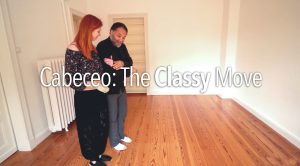
The ‘Classy’ Move

Truth be told, the beginner dancer that does this will make themselves, and their dancing partner look absolutely fabulous regardless of how the dance went. What is it ? It’s The ‘Classy’ Move.

Read More »

Wine & Tango

Stop and think about something for a moment: Wine is alcohol (duh). Alcohol is a depressant, not a stimulant, it lowers our inhibitions, and ability for rational thought. It allows for us to do things while under it’s effects (inebriation) that we wouldn’t normally do. Like for instance, ‘drunk dial the ex’, or taken to the extreme – driving while intoxicated (tsk, tsk, tsk). Typically the average ‘wine’ drinker never gets beyond the tipsy stage….they can ‘hold their liquor’ as it were.

Read More »

Tango Improvement

You say the words, “I want to get better”. You mouth them as you watch the latest performance tango video on youtube. While at the same time, the thought flashes in your mind that you should schedule a private or two with X. ‘X’ being the local variant that teaches what you ‘believe in’. This teacher is also the one that you have gone to before and from your perspective has ‘helped’ you.

Read More »

Discipline

Ballet dancers know all too well that a good dance teacher is strict, hard as a nails, and won’t let you get away with anything. While it may be hard on the body, and hard on the ego, the fact is that dance teachers like that are a godsend. However, the teacher is only one component to the educational process.

Read More »

Architecture

Architecture. There are certain things we want to do with our bodies in relation to Argentine Tango and Social Dancing, one of them is to ‘close our fingers’ or bring our fingers together in every possible place where we lay our hands on our partners or they come into contact with our partner’s bodies.

Read More »

10 REASONS TO SUBSCRIBE

There are 4 Levels of Access: Free, Basic, Premium, and Premium+. Free pays nothing but gets a perk just for signing up. 

1.) Free Users get to see 5 of the 125 Different Tango Topics on the site. Plus you get access to the entire Tango Reminders and Tango Ideas sections of the site. These are short form Topic descriptors with a little detail about the topic and the video.

2.) 
Basic and Premium users Save A BOATLOAD of MONEY! Buying this stuff outright is expensive.

3.) Basic, Premium, and Premium+ users get access to the ALL ARTICLES and THE FULL ARTICLE which you can’t see right now.

4.) Basic, Premium, and Premium+ users have way better video resolution: Free = 420p, Basic = 720p, Premium = 1080p and 4K. 

5.) Basic, Premium, and Premium+ users get the ‘Dancing Perspectives’ & ‘The Soup’ sections of the document you just read (Lead, Follow, and Dancing) which are open to you. And that’s where all the good stuff is at. 

6.) Video Downloads! 

7.) Access to the Tango Topics Music Library (22 Curated Golden Age Orchestras)

8.) Access to ‘Tango Del Dia’ – Our Music Education System with access to 14 Days of Music, 30 Days of Music Education, and 30 More Days of Tango Del Dia. 

9.) We explain things, break the vocabulary down in a visual way, from multiple angles, showing feet, hands, and close ups! Yes there’s a lot of talking but we want you to understand what it is that you’re doing and why, not just steps, patterns, and figure

and #10:
No more annoying ads at the bottom of the page, begging you to subscribe! 

Keep something in the back of your mind: What you’re seeing in a youtube video is a couple that is performing for the 15th row for a room full of people. They’re not social dancingWhereas this website is all about ‘Social Tango’  or how to make things function on a social dance floor. Social Dance floor ? Your local milonga! They are showing you flashy moves as a presentation, to show off! But not stopping and talking about how this works which is what you need to see. This website and all of it’s content show you the how and  why you’d want to put that piece of vocabulary there, or how to make things work. This website is all about those things and more!

You could watch Tango YouTube videos and thereby spend your time, trying to infer, and figure out how things may work in that particular situation. Bend your body this way or that, twist and force this position or that. Place your foot here or there and figure it out. This is known as Tango Twister.  Which can be a lot of fun, but more than likely it won’t help you, because you’re missing something: The explanation from an experienced teacher showing you how to properly excute this stuff from a Leading Perspective as well as from a Following Perspective!

The goal of YouTube videos is to get you to study with those teachers in person. The goal of Tango Topics videos allows you to work at your own pace, in the comfort of your own space, so that you can play them over and over again to improve your understanding of the vocabulary or technique being described to therefore better your dancing experience. The goal of classes and workshops is to get you to come back over and over and over again, thereby spending more money with that teacher. This website and the videos under it are here to act as a resource for you to help you to improve your dance. Pay once and you’re done.

Eventually, one way or another you’re going to pay for this lesson, either here and now, or with them. TANSTAAFL! The difference between that lesson and this ? Is that you get to play this lesson over and over and over again. Further still, there are supporting materials (other videos) that help to explain the language and the underlying technique of how and why things work, so you can easily reference those things in the corresponding articles that go with the material, and or any language in the Tango Topics Dictionary. 

DROP ME A MSG HERE

Hide picture