Failure To Analyze

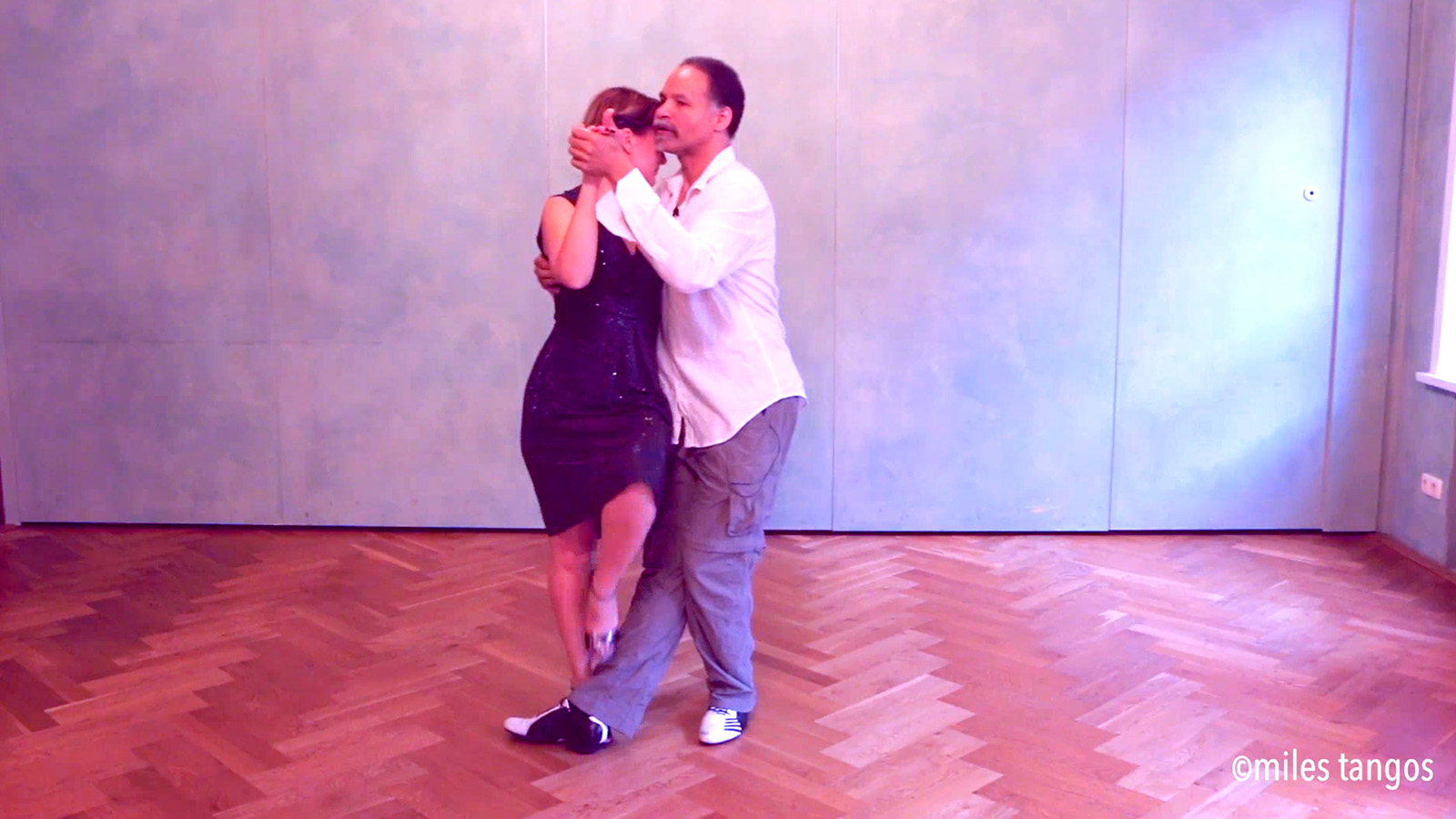
Failure to analyze why things don’t work and you will continue to create problems for yourself and your partners. Invest in either private lessons, private study, or instructional videos. However, repeating the same thing over and over again expecting different results is not the smartest thing to do. Ask, analyze, question, investigate, try, refine, clarify constantly
MORE REMINDERS

The Neurology of Leading – Part 2

A question that comes up for some leads, not all leads, but some Leads (big ‘L’) is why is it important that you spend a lot of time listening to Tango music, and more importantly to mark the music ? Typically you’ll hear this question as “I have a life you know ? I have things to do. I can’t sit around all day long just listening to song after song after song for days, weeks, months, marking up every song in some crazy 8 count beat sort of way, and then try to memorize all that all so….

Read More »

Proprioception

According to Webster’s Dictionary the word ‘Proprioception’ comes from the latin word ‘proprius’ meaning “one’s own” or “individual”, and ‘capio’ or ‘capere’ meaning to take or to grasp. The word itself means a perception of one’s own body in space and time, as in the awareness of one’s body in space and time, as it refers to bodily position in space and time.

Read More »

Couples

Couples, as a pair, develop their own shorthand for communicating with each other. They remark on events in their time together as ‘that time we did that thing when that thing happened, remember ?’. They invest their emotional time in each other as caring, loving (hopefully), partners that genuinely are invested in each other’s successes (hopefully). In one respect they are to each other intimates, while at the same time they see each other as support mechanisms, and so much more.

Read More »

The Walking Debate

A good portion of Follower’s close their eyes while dancing. The Lead, obviously, can’t close their eyes, but they do cast their eyes towards the floor to watch their Follower’s feet (tsk, tsk, tsk). They close their eyes for a variety of reasons: 1.) To be able to concentrate better. 2.) To ‘feel’ their partner in a more ‘connected’ way. 3.) To not be so distracted by the rest of the room. 4.) To feel more intimate. 5.) To tune out.

Read More »

Wine & Tango

Stop and think about something for a moment: Wine is alcohol (duh). Alcohol is a depressant, not a stimulant, it lowers our inhibitions, and ability for rational thought. It allows for us to do things while under it’s effects (inebriation) that we wouldn’t normally do. Like for instance, ‘drunk dial the ex’, or taken to the extreme – driving while intoxicated (tsk, tsk, tsk). Typically the average ‘wine’ drinker never gets beyond the tipsy stage….they can ‘hold their liquor’ as it were.

Read More »

The Non-Gender Cabeceo

What is a ’Non-Gender Cabeceo’ ? A Non-Gender Cabeceo works exactly the same way that a Gendered Cabeceo works. There’s nothing special or different about it. The practice is exactly the same regardless of Gender, or at least it should be. If same sex dancing, or role fluidity, is permitted at Milongas, Marathons, and Encuentros, then the same rules apply in a Gendered Cabeceo.

Read More »

The Seasoned Dancer

The dancer who has been dancing for a certain amount of time has passed through the multiple, multiple flirtations. They’ve had the flirtations that lead to attractions, and then the attractions that turn into dalliances, and some that go beyond that.

Read More »

The ‘Connection’ Fallacy

Connection” is a wonderful idea. We like to believe in the romanticism of this word, and all that it implies, which is as it turns out a considerable amount. However, the word itself, from a Tango perspective, has been beat up and bruised that it more than likely has lost it’s original intent. When you say the word to someone it could mean any one of eight (8) different things as it relates to the dance. However, this is not a definition of the word, for that please see the Tango Topics Definition of the word "Connection". 


Read More »

Learning Castellano

Learning to speak and write in Spanish can be lots of fun. Doing so can really force you to understand that your own language is really wacky, that it is fully of colloquial phrases that when translated is a literal mess of confusion, and furthermore forces you to really start looking at your own culture and choices. However when it comes to Argentine Tango, and ultimately going to Buenos Aires, the question comes up … “Do you really need to learn to speak Spanish ?”

Read More »

Heel vs. Toe (Lead) ?

Today’s Thought is a very old debate with a twist, as you’ll soon see. The Debate ? To step forward (or side) with a Heel strike first OR a Toe point first. So let’s debate, shall we ? The Heel Side: This side of the debate says that you can and should, when stepping forward, step forward as if you were walking on the street, normally. You would use the heel in a natural way, allowing it to strike the pavement or the floor (in the case of dancing) as you would normally. There’s nothing about this idea that is new. This is something that you don’t necessarily need to learn a whole lot about, as it just ‘happens’. There’s not a lot to it really.

Read More »

10 REASONS TO SUBSCRIBE

There are 4 Levels of Access: Free, Basic, Premium, and Premium+. Free pays nothing but gets a perk just for signing up. 

1.) Free Users get to see 5 of the 125 Different Tango Topics on the site. Plus you get access to the entire Tango Reminders and Tango Ideas sections of the site. These are short form Topic descriptors with a little detail about the topic and the video.

2.) 
Basic and Premium users Save A BOATLOAD of MONEY! Buying this stuff outright is expensive.

3.) Basic, Premium, and Premium+ users get access to the ALL ARTICLES and THE FULL ARTICLE which you can’t see right now.

4.) Basic, Premium, and Premium+ users have way better video resolution: Free = 420p, Basic = 720p, Premium = 1080p and 4K. 

5.) Basic, Premium, and Premium+ users get the ‘Dancing Perspectives’ & ‘The Soup’ sections of the document you just read (Lead, Follow, and Dancing) which are open to you. And that’s where all the good stuff is at. 

6.) Video Downloads! 

7.) Access to the Tango Topics Music Library (22 Curated Golden Age Orchestras)

8.) Access to ‘Tango Del Dia’ – Our Music Education System with access to 14 Days of Music, 30 Days of Music Education, and 30 More Days of Tango Del Dia. 

9.) We explain things, break the vocabulary down in a visual way, from multiple angles, showing feet, hands, and close ups! Yes there’s a lot of talking but we want you to understand what it is that you’re doing and why, not just steps, patterns, and figure

and #10:
No more annoying ads at the bottom of the page, begging you to subscribe! 

Keep something in the back of your mind: What you’re seeing in a youtube video is a couple that is performing for the 15th row for a room full of people. They’re not social dancingWhereas this website is all about ‘Social Tango’  or how to make things function on a social dance floor. Social Dance floor ? Your local milonga! They are showing you flashy moves as a presentation, to show off! But not stopping and talking about how this works which is what you need to see. This website and all of it’s content show you the how and  why you’d want to put that piece of vocabulary there, or how to make things work. This website is all about those things and more!

You could watch Tango YouTube videos and thereby spend your time, trying to infer, and figure out how things may work in that particular situation. Bend your body this way or that, twist and force this position or that. Place your foot here or there and figure it out. This is known as Tango Twister.  Which can be a lot of fun, but more than likely it won’t help you, because you’re missing something: The explanation from an experienced teacher showing you how to properly excute this stuff from a Leading Perspective as well as from a Following Perspective!

The goal of YouTube videos is to get you to study with those teachers in person. The goal of Tango Topics videos allows you to work at your own pace, in the comfort of your own space, so that you can play them over and over again to improve your understanding of the vocabulary or technique being described to therefore better your dancing experience. The goal of classes and workshops is to get you to come back over and over and over again, thereby spending more money with that teacher. This website and the videos under it are here to act as a resource for you to help you to improve your dance. Pay once and you’re done.

Eventually, one way or another you’re going to pay for this lesson, either here and now, or with them. TANSTAAFL! The difference between that lesson and this ? Is that you get to play this lesson over and over and over again. Further still, there are supporting materials (other videos) that help to explain the language and the underlying technique of how and why things work, so you can easily reference those things in the corresponding articles that go with the material, and or any language in the Tango Topics Dictionary. 

DROP ME A MSG HERE

Hide picture