video
play-rounded-fill

Physiological Control

Control is a really hard thing to get. It takes a while to have precise, or precision, control over exact foot placement, which is insanely important. It takes time to build up the necessary minute control that one needs to have over one’s body. A millimeter here, a millimeter there, cumulatively, can make all the difference between a dance that sucks (for both parties) and one that is absolutely fabulous. Precision control is where all the toys are at.

If you’re thinking that this is perfectionism. Think again. This is a necessary pathway to dancing with the people that you want to dance with. You know, that 10% of the room that are very skilled dancers, who look beautiful (visual lines and what not) to dance with and only dance with the other 10% of the room. If you want those dances, then that means you’re going to have to up your game. And upping your game in this case starts with having detailed, precise, precision control over every aspect of your movements. Foot placement, hand pressures, micro forearm placements and pressures, micro finger placement and pressures…etc. All of this boils down to hyper awareness of one’s own body. If all of that sounds like work to you, that’s because it is, at first. Later on it won’t be work, it will become part of your regime of awareness. You want better ? You want to dance with better dancers ? You want to dance with that 10% of the room ? Guess what ? That means work! This stuff isn’t handed to you on a silver platter just because you show up in a pair of nice shoes.

Lastly if you’re thinking that a few classes on this or that are going to help, think again. This isn’t about classes, this is about private practice, mindful practice, and repetition as part of a daily solo practice regime which should start with a series of tango exercises and finish off with walking exercises!
MORE REMINDERS

Tango Cities

Today’s Tango Thought covers a labor of Tantalus … where is Tango danced and in what cities ? What follows is by no means an exhaustive list of places where tango is danced, it only scratches the surface.

Read More »

Practice (Part 8)

The question of what to practice for most dancers is really simple. The belief is that you should practice ‘dancing’. And this is not always the case. To be fair, while Tango does require a neurological adjustment on multiple levels which can only be attained from actual dancing – this is called ‘the neurology of dancing’, this is a given. However, in order to get to that place where refinements can actually occur in one’s dance, one has to practice, and that practice is not, so that we’re clear, with a partner, it is individually or solo practice.

Read More »

Giving Up Tango

There comes a point in your Tango life for one of several reasons where you find yourself in an odd place – the want to give up Tango. The most common reason is that you’re just not getting the same thing from the dance as you used to get from it. You go to Milongas. You find yourself sitting more, talking more, and dancing less.

Read More »

Physiological Contact

There is one aspect of The ‘Connection‘ Fallacy that comes up a lot and that’s the idea that there is some mystical/spiritual/magical way in which we communicate in the dance. That communication is stated as how our ‘connection’ is to someone and them to us and how well we ‘connected’ with each other. Rubbish! Not to piss in someone’s Cheerios but that’s just magical thinking.

Read More »

Getting To Buenos Aires

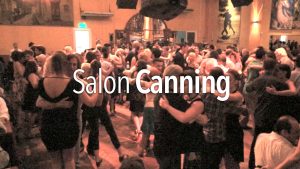
You’ve been dancing for a while, and you keep seeing these posts about Buenos Aires. Your dream has slowly developed to go to Buenos Aires, to experience for yourself what all the fuss is about. First there’s the dancing, you’ve heard it’s the best. There’s the shoes! OMG the shoes. Then there are friends that have been and rave about teacher X or Milonga Y. You’ve see the videos of performances at Salon Canning (but didn’t know it was Salon Canning), the pictures from Milongas, and thought to yourself that it didn’t look all that challenging than your local milonga there are just more people. You’ve heard that Spanish isn’t necessarily a requirement because there’s a lot of foreigners that speak English, and a good portion of the teachers speak it too. So you if you went, you wouldn’t really need to learn Spanish. 

Read More »

Getting Into The Encuentro

This is a FIVE step process, that you will want to follow religiously, which does not necessarily depend on where you live. If you’re an American dancer and want to break into the scene in Europe, then this is a post for you. If you’re already living in Europe then you have a slightly different pathway, but the suggestions are exactly the same.

Read More »

Social Dancing

Social Dancing’ means going out with friends, or to meet friends, at a Milonga, for the purpose of getting together to dance Argentine Tango (or most any other dance) better known as ‘Social Tango’. The emphasis is on the social part, and not the technical part.

Read More »

Good Lead ?

There are many things to look for in a ‘Good’ Lead. Like for instance, the ability to keep time within the beat structure meaning that they’re placing their Follower’s on beat and not necessarily themselves. Still another is their posture which is reflected in the Follower’s posture as well. Still one more is the ‘cleanliness’ by which they execute a particular piece of vocabulary. That said ‘execution’ is done sharply, with snap and polish, and shows off their Follower, and in doing so, themselves. 😉 Those are some good signs of what qualifies as a ‘good’ lead (the action, not the person).

Read More »

10 REASONS TO SUBSCRIBE

There are 4 Levels of Access: Free, Basic, Premium, and Premium+. Free pays nothing but gets a perk just for signing up. 

1.) Free Users get to see 5 of the 125 Different Tango Topics on the site. Plus you get access to the entire Tango Reminders and Tango Ideas sections of the site. These are short form Topic descriptors with a little detail about the topic and the video.

2.) 
Basic and Premium users Save A BOATLOAD of MONEY! Buying this stuff outright is expensive.

3.) Basic, Premium, and Premium+ users get access to the ALL ARTICLES and THE FULL ARTICLE which you can’t see right now.

4.) Basic, Premium, and Premium+ users have way better video resolution: Free = 420p, Basic = 720p, Premium = 1080p and 4K. 

5.) Basic, Premium, and Premium+ users get the ‘Dancing Perspectives’ & ‘The Soup’ sections of the document you just read (Lead, Follow, and Dancing) which are open to you. And that’s where all the good stuff is at. 

6.) Video Downloads! 

7.) Access to the Tango Topics Music Library (22 Curated Golden Age Orchestras)

8.) Access to ‘Tango Del Dia’ – Our Music Education System with access to 14 Days of Music, 30 Days of Music Education, and 30 More Days of Tango Del Dia. 

9.) We explain things, break the vocabulary down in a visual way, from multiple angles, showing feet, hands, and close ups! Yes there’s a lot of talking but we want you to understand what it is that you’re doing and why, not just steps, patterns, and figure

and #10:
No more annoying ads at the bottom of the page, begging you to subscribe! 

Keep something in the back of your mind: What you’re seeing in a youtube video is a couple that is performing for the 15th row for a room full of people. They’re not social dancingWhereas this website is all about ‘Social Tango’  or how to make things function on a social dance floor. Social Dance floor ? Your local milonga! They are showing you flashy moves as a presentation, to show off! But not stopping and talking about how this works which is what you need to see. This website and all of it’s content show you the how and  why you’d want to put that piece of vocabulary there, or how to make things work. This website is all about those things and more!

You could watch Tango YouTube videos and thereby spend your time, trying to infer, and figure out how things may work in that particular situation. Bend your body this way or that, twist and force this position or that. Place your foot here or there and figure it out. This is known as Tango Twister.  Which can be a lot of fun, but more than likely it won’t help you, because you’re missing something: The explanation from an experienced teacher showing you how to properly excute this stuff from a Leading Perspective as well as from a Following Perspective!

The goal of YouTube videos is to get you to study with those teachers in person. The goal of Tango Topics videos allows you to work at your own pace, in the comfort of your own space, so that you can play them over and over again to improve your understanding of the vocabulary or technique being described to therefore better your dancing experience. The goal of classes and workshops is to get you to come back over and over and over again, thereby spending more money with that teacher. This website and the videos under it are here to act as a resource for you to help you to improve your dance. Pay once and you’re done.

Eventually, one way or another you’re going to pay for this lesson, either here and now, or with them. TANSTAAFL! The difference between that lesson and this ? Is that you get to play this lesson over and over and over again. Further still, there are supporting materials (other videos) that help to explain the language and the underlying technique of how and why things work, so you can easily reference those things in the corresponding articles that go with the material, and or any language in the Tango Topics Dictionary. 

DROP ME A MSG HERE

Hide picture